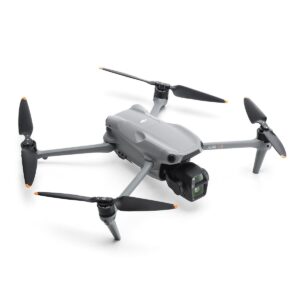
Based on current 2026 models, pricing, specifications, and recent expert recommendations, these five make a strong comparison list. The DJI Mavic 4 Pro is currently regarded as a top-tier camera drone, while the DJI Mini 5 Pro brings a 1-inch sensor into a lightweight 249g-class body. The Air 3S is a strong travel option, the DJI Flip targets beginners and vloggers, and the Potensic ATOM 3 gives readers a more affordable DJI alternative.
#1
DJI Mavic 4 Pro - Show Now and Save Big today with Coupon codes
A flagship triple-camera drone built for professional aerial photography, filmmaking and creators who want maximum camera flexibility.
The DJI Mavic 4 Pro is the drone to consider if image quality and camera versatility matter more than portability or price. Its three-camera system combines a 4/3-inch Hasselblad main camera with two telephoto cameras, giving photographers multiple focal lengths without having to change equipment. It also introduces DJI's Infinity Gimbal, 100MP still photography, 6K/60fps HDR video and up to 51 minutes of advertised flight time.
4/3-inch 100MP Hasselblad main camera
6K/60fps HDR video
70mm medium telephoto camera
168mm telephoto camera
360° Infinity Gimbal
Up to 51 minutes advertised flight time
Nightscape omnidirectional obstacle sensing
DJI O4+ transmission
Up to 30 km transmission distance under applicable FCC conditions
70° upward camera movement
ActiveTrack and advanced intelligent flight features
Approximately 1,063g takeoff weight
Pros
Outstanding camera quality
Three useful focal lengths
Excellent low-light capabilities
100MP still photos
6K/60fps HDR video
Long 51-minute advertised flight time
Advanced obstacle sensing
Excellent choice for professional creators
Cons
Expensive
Much heavier than mini drones
More than most casual users need
Premium accessories and batteries add substantially to the cost
Regulations and weight requirements can be more restrictive than sub-250g models
A lightweight premium camera drone with a 1-inch sensor, advanced obstacle sensing and professional video features.
The DJI Mini 5 Pro is one of the most interesting lightweight drones for 2026 because it brings a 1-inch 50MP camera into a compact 249g-class design. That combination makes it particularly appealing to travelers who don't want to carry a large professional drone but still want substantially better imaging than typical entry-level models.
1-inch CMOS sensor
50MP still photos
f/1.8 aperture
4K/60fps HDR
4K/120fps slow motion
Up to 36 minutes with the standard battery
Up to 52 minutes with the Intelligent Flight Battery Plus
249g standard takeoff weight
Nightscape omnidirectional obstacle sensing
ActiveTrack 360°
225° gimbal rotation
42GB internal storage
O4+ transmission up to 20 km under applicable FCC conditions
Pros
Excellent image quality for its size
1-inch sensor
Very portable
50MP photos
Strong low-light performance
Advanced obstacle sensing
Excellent tracking features
True vertical shooting
Long optional battery life
Cons
More expensive than basic mini drones
Standard battery flight time is shorter than the maximum advertised Plus-battery figure
Small size means it is still more vulnerable to strong winds than heavier drones
Extra batteries and Fly More packages increase the total cost
The DJI Air 3S sits between lightweight Mini drones and DJI's professional Mavic line. It is particularly appealing to travelers and photographers because it combines a 1-inch primary camera with a 70mm medium telephoto camera. That gives users the flexibility to shoot wide landscapes as well as compressed portraits and distant subjects without moving the drone as much.
1-inch 50MP primary camera
70mm 48MP medium telephoto camera
3x optical zoom
4K/60fps HDR video
4K/120fps slow motion
Up to 45 minutes advertised flight time
Omnidirectional obstacle sensing
Nightscape obstacle sensing
O4 video transmission
Up to 20 km transmission under applicable FCC conditions
724g takeoff weight
A sub-249g camera drone offering 4K/60fps video, a 3-axis gimbal, AI tracking and long advertised flight times at a lower price than many DJI competitors.
Under 249g
1/1.3-inch CMOS sensor
4K/60fps video
Up to 8K still photography according to Potensic's product listing
3-axis mechanical gimbal
AI Track 2.0
Up to 16km transmission
Up to 40 minutes flight time with standard configuration
Foldable design
Vertical shooting
C0 classification listed by Potensic for the model
Pros
Lower price than most premium DJI options
Under 249g
3-axis gimbal
4K/60fps video
AI tracking
Long advertised flight time
Compact and portable
Good alternative for shoppers who don't want DJI
Cons
Smaller ecosystem than DJI
Less established software and accessory ecosystem
Availability varies by market
Current official listing indicates the ATOM 3 is unavailable in the United States
Professional users may prefer DJI's more mature flight and camera ecosystem